2026 Best Types of Plastic Wear Plates for Buyers?

Choosing the right Plastic Wear Plates in 2026 requires more than comparing price, hardness, or impressive product claims. Buyers must connect material performance with real operating conditions, including load, sliding speed, impact, temperature, moisture, chemicals, and abrasive particles. A plate that performs well inside a dry conveyor may fail quickly in a wet stone-processing line.

Tribology expert Dr. H. Peter Jost defined tribology as “the science and technology of interacting surfaces in relative motion.” His principle remains useful when evaluating UHMW-PE, HDPE, nylon, PTFE, PEEK, and specialty composite plates. Each material behaves differently under pressure. UHMW-PE often offers low friction and strong impact resistance. Nylon can handle demanding mechanical contact. PEEK may suit higher-temperature or chemically aggressive environments, but its cost deserves careful review.

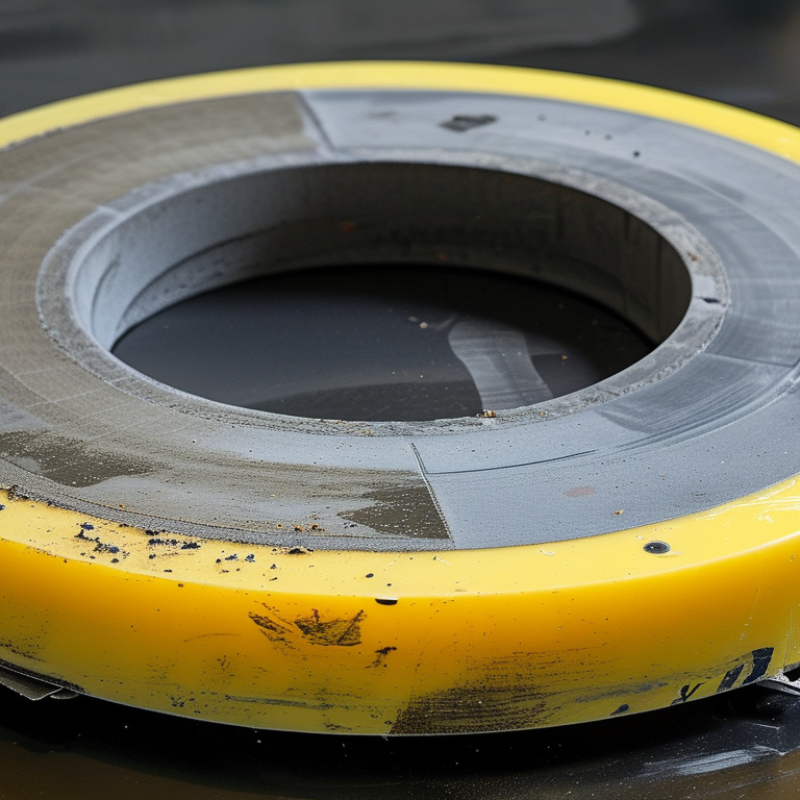
Real experience matters. Inspect the worn surface, not only the catalog. Look for uneven grooves, melted edges, embedded grit, loose fasteners, and thin spots near loading zones. These details reveal whether abrasion, impact, frictional heat, or poor alignment caused the failure. Small observations can change the buying decision.

There is no universal winner.

A neat ranking can mislead. This guide compares the best types of Plastic Wear Plates by durability, friction, temperature range, machinability, installation demands, and total ownership cost. It also recognizes an uncomfortable truth: laboratory results may not match field performance. Buyers should request verified test data, confirm tolerances, and trial the selected grade in the actual application before committing to a large order.
2026 Best Types of Plastic Wear Plates for Buyers?

What Are Plastic Wear Plates and Why Are They Important in 2026?

Plastic wear plates are engineered sacrificial surfaces that protect machines from friction, impact, and material flow. They sit between moving parts, chutes, conveyors, and heavy loads. Unlike metal liners, plastic plates often reduce noise, corrosion, and lubrication needs. That matters in 2026, when buyers face stricter maintenance targets and rising energy costs. A well-selected plate can extend equipment life and reduce unplanned stoppages.

Material choice controls performance. UHMW-PE suits sliding applications, bulk handling, and moderate impact. Nylon offers stronger load resistance, but it may absorb moisture and change dimensions. PTFE provides very low friction, especially in cleaner, controlled environments. PEEK handles higher temperatures and demanding chemical conditions, although its price requires careful justification. No material wins everywhere. That is easy to forget.

In practical equipment assessments, thickness, mounting method, operating temperature, and contact pressure deserve equal attention. A thick plate can still fail when bolts create stress points or edges remain unsupported. Buyers should request verified test data, dimensional tolerances, and traceable quality records. Recycled content may support sustainability goals, but it should not replace performance testing. Small errors in load estimates can become expensive failures. Inspect worn surfaces regularly, especially around corners, joints, and loading zones.
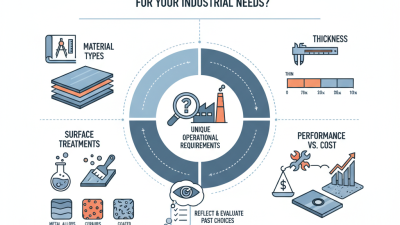

How Are Plastic Wear Plates Classified by Material and Performance?

2026 Best Types of Plastic Wear Plates for Buyers?

Plastic wear plates are classified by both material and performance. UHMW-PE suits chutes, hoppers, and sliding surfaces because it combines low friction with strong impact resistance. HDPE costs less and handles moisture well, but it may deform under continuous heat. Nylon offers better load capacity, while PTFE performs well where friction must remain extremely low. PEEK tolerates demanding temperatures and chemicals, although its price is considerably higher.

The selection should follow the working conditions, not only the material name. Check abrasion, impact, temperature, load, moisture, and chemical exposure. ASTM D1894 can help compare friction behavior, while ASTM D4060 evaluates abrasion resistance under defined test conditions. These results are useful, but field performance can differ. Poor alignment, trapped grit, or loose fasteners may shorten service life quickly. PlasticsEurope reported global plastics production of 413.8 million tonnes in 2023, showing the scale of material diversity available to buyers.

Tips: Request test data for the actual operating temperature and load. Compare wear rate, not just hardness. Ask whether the plate is suitable for dry sliding, wet service, or abrasive particles. A simple UHMW-PE plate may outperform a premium polymer in a cold, dirty chute. That is not always obvious. Reliability also depends on thickness, support spacing, and installation quality. Surface color can help inspection, but it does not prove performance.

Which Plastic Wear Plate Types Fit Different Industrial Applications?

Which Plastic Wear Plate Types Fit Different Industrial Applications?

Plastic wear plates should match the load, sliding speed, temperature, and contamination level. UHMW-PE suits conveyor guides, hopper liners, and bulk-material chutes. Its low friction helps reduce noise and product damage. Nylon performs better under heavier compressive loads, especially around rollers and machine bases. PTFE works well where friction must remain extremely low. However, it has weaker load resistance and higher material cost.

For hot, chemically aggressive areas, PEEK can offer stronger dimensional stability than common plastics. It is useful near process equipment, but its price requires careful justification. HDPE remains practical for moderate-duty liners and outdoor handling systems. PlasticsEurope reported global plastic production of about 414 million tonnes in 2023, showing the scale of material selection and recycling challenges. The report also highlights growing pressure for better resource efficiency. A perfect plate rarely exists. Actual wear can differ from laboratory figures.

Tips: Check the supplier’s abrasion data under conditions close to your operation. Measure impact, temperature, dust, and moisture. A chute carrying sharp stone needs different protection than one carrying grain. ASTM D4060 abrasion results can help comparison, but they should not replace field trials. Also inspect bolt holes and plate edges. Failures often begin there. I would not select by price alone. A cheaper plate may require more frequent shutdowns. One practical trial can reveal what a catalogue misses.

2026 Best Types of Plastic Wear Plates for Buyers? — Which Plastic Wear Plate Types Fit Different Industrial Applications?

Comparison of commonly used engineering plastics for sliding, abrasion-resistant and low-friction wear plate applications
Plastic Wear Plate Type Key Performance Characteristics Typical Service Temperature* Friction and Wear Behavior Best-Fit Industrial Applications Main Advantages Important Limitations Relative Cost
UHMW-PE
(Ultra-High-Molecular-Weight Polyethylene)
Very high impact strength, excellent sliding properties and strong resistance to abrasion, moisture and many chemicals. Low density, approximately 0.93–0.95 g/cm³. Approximately −100 to +80°C continuous service, depending on grade and load. Very low friction; performs well in dry sliding and material-flow applications. Good resistance to adhesive wear. Hoppers, chutes, conveyor liners, truck beds, bulk-material handling equipment, guide rails and marine fender components. Excellent impact resistance; does not absorb significant moisture; easy to machine; reduces noise and material hang-up. Lower stiffness and load capacity than nylon, POM and PEEK; thermal expansion is relatively high; can deform under sustained heavy loads. Low to medium
HDPE
(High-Density Polyethylene)
Good chemical resistance, moisture resistance and impact performance. Stiffer and harder than many low-density polyethylene grades. Approximately −50 to +80°C continuous service, grade-dependent. Low friction with good sliding performance, but generally lower abrasion resistance than UHMW-PE in severe-duty service. Light- to medium-duty chute liners, tank and vessel linings, conveyor guides, packaging machinery and general-purpose wear strips. Economical; lightweight; easy to fabricate; suitable for wet and corrosive environments. Limited high-temperature capability; lower wear life under high pressure, high speed or abrasive impact than specialized engineering plastics. Low
PA6 Nylon
(Polyamide 6)
High strength, hardness and stiffness with good resistance to impact and abrasion. Commonly available as cast or extruded plate. Approximately −40 to +100°C continuous service; short-term limits may be higher for selected grades. Good wear resistance under moderate-to-high loads; friction can increase if lubrication is inadequate or moisture changes occur. Gears, rollers, bushings, wear pads, chain guides, pulleys and load-bearing sliding components. Higher load capacity and stiffness than polyethylene; good fatigue and abrasion performance; suitable for machined parts. Absorbs moisture, which can change dimensions and mechanical properties; may swell in humid or wet conditions; not ideal for precision wet-service fits without design allowance. Medium
POM
(Acetal / Polyoxymethylene)
High dimensional stability, stiffness, hardness and fatigue resistance. Low moisture absorption compared with nylon. Approximately −40 to +100°C continuous service, grade-dependent. Low friction and good resistance to sliding wear, especially in clean, moderate-load mechanisms. Precision wear strips, conveyor components, rollers, guide tracks, chain sprockets, bushings and automated equipment. Good dimensional accuracy; stable in humid environments; excellent machinability; good fatigue performance. Impact resistance is generally lower than UHMW-PE; limited resistance to strong acids and oxidizing chemicals; may be unsuitable for heavy abrasive impact. Medium
PTFE
(Polytetrafluoroethylene)
Exceptionally low friction, excellent chemical resistance and strong non-stick behavior. Very low moisture absorption. Approximately −200 to +260°C continuous service, subject to grade, load and application conditions. Lowest friction among common engineering plastics; wear resistance is moderate in unfilled form and improves with suitable fillers. Chemical-processing equipment, valve and pump components, low-friction slide plates, seals, liners and high-temperature sliding interfaces. Outstanding chemical resistance; broad temperature range; non-stick surface; works in many dry-running applications. Low hardness and stiffness; high creep and deformation under load; unfilled grades can wear quickly under abrasive or high-pressure service. Medium to high
PEEK
(Polyether Ether Ketone)
High strength, stiffness, fatigue resistance and dimensional stability at elevated temperatures. Strong resistance to many chemicals and radiation. Approximately −60 to +250°C continuous service for suitable grades; design limits depend strongly on load and reinforcement. Good wear performance over a wide temperature range; filled grades can provide improved friction and wear resistance. Aerospace, semiconductor equipment, oil and gas, medical machinery, high-temperature bearings and demanding precision wear components. Excellent temperature capability; high mechanical strength; low moisture absorption; good long-term dimensional stability. High material and machining cost; unnecessary for ordinary bulk-material liners; grade selection is critical for tribological performance. Very high
Polyurethane
(Thermoplastic or Cast PU Wear Plate)
High elasticity, tear strength and impact resistance, with hardness available across a broad range. Particularly effective against gouging and repeated impact. Typically approximately −30 to +80°C continuous service; specialized grades may extend beyond this range. Excellent abrasion and impact resistance; friction is generally higher than PTFE, POM or UHMW-PE. Screening equipment, vibrating feeders, mining chutes, rollers, seals, scrapers and applications involving impact or sharp-edged materials. Excellent resistance to cutting, tearing and impact; absorbs vibration and reduces noise; can outperform rigid plastics in severe abrasion. Temperature and chemical resistance vary widely by polyurethane chemistry; may swell or degrade in some oils, solvents, acids or hot water. Medium to high
PVDF
(Polyvinylidene Fluoride)
Strong chemical resistance, high purity, good mechanical strength and low moisture absorption. Suitable for corrosive process environments. Approximately −40 to +140°C continuous service, grade-dependent. Moderate friction and wear performance; selected more often for chemical resistance and purity than for maximum abrasion resistance. Chemical-processing liners, semiconductor equipment, piping supports, pump components and corrosive or high-purity handling systems. Excellent resistance to many acids, halogens and solvents; good UV and weather resistance; suitable for clean applications. More expensive than polyethylene; not the first choice for severe impact abrasion; check compatibility with strong bases and elevated temperatures. High
*Temperature ranges are typical continuous-service guidelines for unfilled or standard grades and can change substantially with load, sliding speed, part thickness, reinforcement, lubrication, chemical exposure and environmental conditions. Final selection should be verified against the specific material grade and application test data.

How Should Buyers Compare Wear Resistance, Load Capacity, and Friction?

For 2026, buyers should compare plastic wear plates under the same test conditions. A low friction coefficient does not automatically mean longer service life.

ASTM G99 pin-on-disk data commonly places UHMW-PE friction near 0.10–0.20 against steel. Nylon often measures around 0.20–0.35. PEEK can perform below 0.20 in controlled tests. These values change with speed, pressure, temperature, and moisture. ASTM D4060 abrasion reports also show wide wear-loss differences between polymers. Test numbers are useful, but they are not promises.

Load capacity needs more than tensile strength. Check compressive strength, creep, impact resistance, and the pressure-velocity limit. A plate carrying a slow, heavy hopper faces different stress from a fast conveyor guide. ISO 6603 impact testing can reveal brittle failure risks. In field checks, measure plate thickness before installation, after 500 operating hours, and near bolt holes. Edge cracking often appears first.

Published engineering data from the PlasticsEurope 2024 materials report supports a broader point: processing conditions strongly affect polymer performance and sustainability claims. That lesson matters here. Recycled content may alter friction, hardness, or consistency. Ask for batch-level test results. One detail is often missed: abrasive dust can act like sandpaper between the plate and product. Buyers should compare real load, sliding speed, temperature, contamination, and expected replacement cost. Laboratory rankings can reverse in service. That is uncomfortable, but realistic.

How Can Buyers Select and Specify the Best Plastic Wear Plate?

Selecting the best plastic wear plate starts with the operating conditions, not the material name. Measure load, sliding speed, impact, temperature, moisture, and chemical exposure. A conveyor carrying damp stone needs different protection from a guide rail handling dry cartons. Small details matter.

Common options include UHMW-PE, nylon, acetal, and PTFE-based materials. UHMW-PE suits low-friction sliding and heavy abrasion. Nylon handles pressure well, but moisture can change its dimensions. Acetal offers stable movement and accurate machining. PTFE-based grades work in demanding low-friction applications, although they may need support under high loads. The “best” choice depends on the failure mode.

Specify plate thickness, length, width, flatness, hole position, and mounting method. Include countersunk holes when fastener heads must stay below the surface. Ask for operating temperature limits, hardness data, wear-test conditions, and chemical compatibility. Do not accept a wear rating without its test method. It can mislead. Check the actual contact pressure and edge loading, because uneven support often causes premature cracking. A small trial section can reveal problems before a full installation. I have seen buyers select a strong grade, then overlook heat from continuous sliding. That mistake is easy to repeat. Leave room for thermal expansion, inspect the first month, and record the wear pattern for a better specification.

2026 Best Types of Plastic Wear Plates for Buyers?

How Can Buyers Select and Specify the Best Plastic Wear Plate?

Typical maximum continuous-use temperatures vary by material family and grade. UHMW-PE and HDPE are commonly selected for low-friction conveying and impact applications, while nylon is suitable for higher-load conditions. PTFE and PEEK provide much higher temperature capability, but buyers should also verify abrasion resistance, chemical exposure, moisture absorption, load, speed, plate thickness, and operating temperature before specifying a wear plate.

Values shown are representative engineering figures for unfilled material families; actual limits depend on grade, load, speed, environment, and design conditions.