China Top 10 Metal Stamping Parts Suppliers?

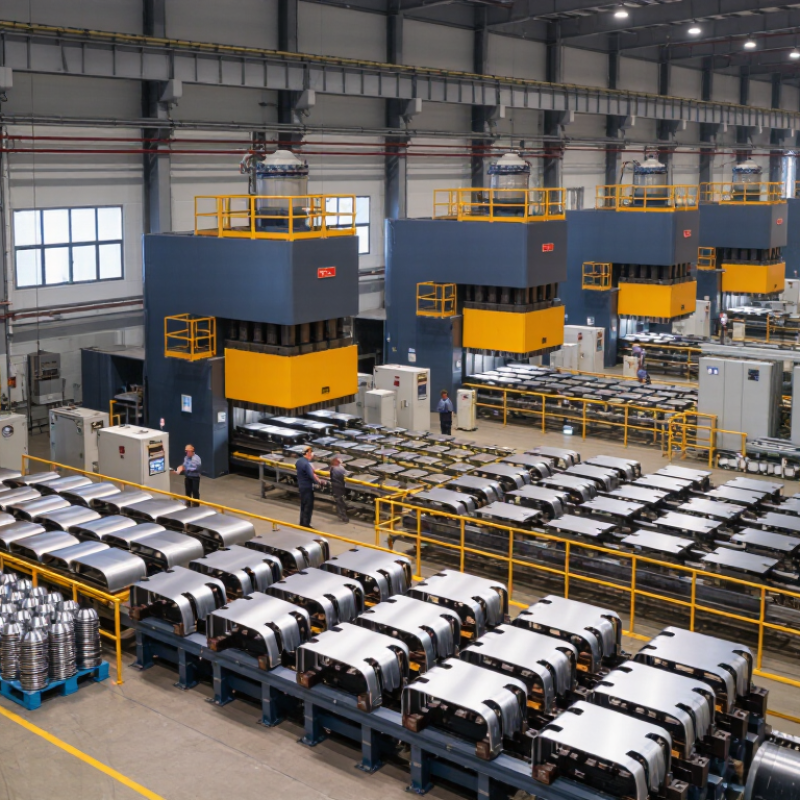
China’s metalworking sector supports automotive, electronics, appliances, energy equipment, and industrial machinery worldwide. Metal Stamping Parts remain essential because they deliver repeatable shapes, tight tolerances, and efficient production at scale. China’s automotive industry produced approximately 31.28 million vehicles in 2024, according to the China Association of Automobile Manufacturers. That volume creates substantial demand for brackets, terminals, shields, housings, and structural components.

Market research also shows continued expansion. Fortune Business Insights estimates that the global metal stamping market will grow steadily through 2032, supported by automotive electrification, consumer electronics, and lightweight materials. Grand View Research identifies automotive applications as a major market segment, while Deloitte’s manufacturing outlook highlights automation, supply-chain resilience, and digital quality control as important competitive factors. These findings help explain why Chinese suppliers increasingly invest in progressive dies, robotic press lines, inspection systems, and engineering services.

But supplier rankings need caution. No ranking is perfect. A factory may excel at high-volume automotive parts but struggle with prototype work or low-volume customization. This guide evaluates China’s top 10 Metal Stamping Parts suppliers through practical criteria, including press capacity, material capability, tooling expertise, ISO certification, inspection equipment, export experience, and delivery reliability. Site audits, sample approvals, and production records still matter more than attractive website claims. Readers should also examine burr control, flatness, surface finish, traceability, and response speed before making a purchasing decision. The strongest supplier is not always the largest one. It is the partner that consistently meets the drawing, schedule, and quality requirements of a specific project.
China Top 10 Metal Stamping Parts Suppliers?

What Are Metal Stamping Parts and How Are They Used?

What Are Metal Stamping Parts and How Are They Used?

Metal stamping parts are components formed from sheet metal using a press and a shaped die. The press applies controlled force to cut, bend, punch, or draw the material. Common materials include steel, aluminum, copper, and stainless steel. These parts may become brackets, terminals, covers, clips, panels, or structural supports.

Manufacturers often use progressive dies for high-volume production. One metal strip moves through several stations, with each station completing a different operation. This method can deliver consistent dimensions and reduce labor time. However, design details matter. Incorrect material thickness, sharp corners, or poor die clearance may cause cracks, distortion, or rough burrs. A perfect drawing does not guarantee a perfect part.

Metal stamping parts support many industries, including appliances, electronics, transportation, and industrial equipment. Engineers usually check strength, corrosion resistance, surface finish, and assembly fit before production. Practical inspection may include gauges, coordinate measuring equipment, and visual checks under proper lighting. Small defects can become expensive problems later.

Tips: Define the material and thickness clearly. Specify critical tolerances, not every dimension. Request samples before mass production. Check burr direction and edge safety. Consider how the part will be assembled. Sometimes, a simpler bend works better than a complex die. That choice deserves reflection.
How to Evaluate China’s Metal Stamping Parts Suppliers

How to Evaluate China’s Metal Stamping Parts Suppliers

Choosing among China’s top metal stamping parts suppliers requires more than comparing quotations. Start with the drawing, material grade, thickness, tolerances, and annual volume. A capable supplier should explain press capacity, tooling design, production speed, and likely forming risks. Ask for inspection records, material certificates, and sample dimensions from actual production equipment. Generic samples prove little.

Factory experience matters most when parts include deep draws, tight holes, or multiple forming stages. Review the supplier’s process flow from coil storage to final packing. Check whether operators use calibrated gauges, vision systems, or coordinate measuring machines. Traceability should connect each batch to material, tooling, inspection results, and production dates. Small details reveal discipline. A clean floor helps, but it is not proof of quality.

Request a pilot run before approving large volumes. Measure critical features independently, then compare results with the supplier’s report. Discuss burr height, surface marks, springback, and packaging damage. These issues often appear after shipping, not during a factory visit. I have learned that fast communication can hide weak engineering. A slower technical response may be more honest. No supplier performs perfectly on every project. Suppliers should explain failures, document corrective actions, and accept practical feedback without defensiveness. Price still matters, but unstable tooling, late changes, and repeated sorting can erase early savings.

China Top 10 Metal Stamping Parts Suppliers? - How to Evaluate China’s Metal Stamping Parts Suppliers

The table below provides a practical, evidence-based scorecard for comparing metal stamping suppliers in China. The benchmarks are general industry evaluation references and should be confirmed against the drawing, material, annual volume, and end-use requirements.
No. Evaluation Dimension What to Check Recommended Evidence Practical Benchmark Weight Score
1 Quality Management System Confirm whether the supplier operates a documented quality system covering incoming inspection, process control, final inspection, nonconformance handling, and corrective action. Valid ISO 9001 certificate, audit report, quality manual, control plan, and corrective-action records. ISO 9001 certification is a strong baseline; customer-specific requirements should be documented separately. 15% __/10
2 Stamping Equipment and Capacity Review press type, tonnage, bed size, stroke, speed, feeder capability, and available capacity for the required production volume. Equipment list, machine specifications, maintenance records, capacity plan, and factory video or audit. The press range must cover the required force and part size with at least 15–20% practical capacity headroom. 12% __/10
3 Material Control and Traceability Verify material grade, thickness, coil or sheet identification, lot control, storage conditions, and traceability from raw material to shipment. Material certificates, incoming inspection records, lot labels, stock records, and traceability samples. Each production lot should be traceable to a material certificate and inspection record. 10% __/10
4 Tooling and Die-Making Capability Assess die design, progressive tooling, transfer tooling, tryout, maintenance, spare parts, and tool-life management. Tooling drawings, die-maintenance schedule, tryout report, tool-life history, and ownership terms. Tooling design approval, documented preventive maintenance, and clearly defined repair and replacement responsibilities. 12% __/10
5 Dimensional and Process Capability Evaluate inspection methods for critical dimensions, burrs, flatness, hole position, forming angles, and repeatability. FAI report, inspection plan, calibrated equipment list, capability study, and sample measurement data. For critical characteristics, a common target is Cpk ≥ 1.33 when the customer specification and process conditions support capability analysis. 15% __/10
6 Secondary Operations Check deburring, tapping, welding, riveting, heat treatment, plating, coating, cleaning, and assembly capabilities. Process flow chart, subcontractor controls, surface-treatment specifications, test reports, and sample parts. All outsourced processes should have approved suppliers, defined specifications, inspection records, and batch traceability. 10% __/10
7 Compliance and Restricted Substances Confirm compliance requirements for restricted substances, environmental declarations, conflict minerals, and destination-market regulations. RoHS and REACH declarations where applicable, supplier declarations, laboratory reports, and compliance procedures. Compliance documentation must match the supplied material, coating, plating, and destination market. 8% __/10
8 Prototype and Production Validation Assess the supplier’s ability to produce prototypes, trial runs, first-article samples, and validated mass-production parts. Prototype samples, dimensional reports, process approval records, pilot-run data, and sample approval procedure. A controlled first-article and pilot-run process should be completed before regular production. 8% __/10
9 Delivery Reliability and Supply Risk Review lead time, production planning, safety stock, logistics options, business continuity, and contingency planning. Capacity schedule, on-time delivery records, disruption plan, backup-process plan, and shipment documentation. Lead time should be stated by stage: tooling, sampling, production, inspection, and transport; delivery performance should be measured monthly. 5% __/10
10 Commercial Transparency and Communication Evaluate quotation clarity, tooling ownership, payment terms, engineering response, change control, warranty, and after-sales support. Itemized quotation, signed specifications, change-request process, communication records, and warranty terms. The quotation should separately identify material, tooling, secondary operations, packaging, inspection, logistics, and applicable taxes or duties. 5% __/10
Weighted Supplier Evaluation Total 100% __/100
Suggested scoring guide: 9–10 = excellent evidence and low assessed risk; 7–8 = acceptable with minor action items; 5–6 = conditional approval requiring a corrective-action plan; below 5 = high risk or insufficient evidence.

China’s Top 10 Metal Stamping Parts Suppliers

China’s Top 10 Metal Stamping Parts Suppliers

China’s top ten metal stamping parts suppliers are often judged by more than production volume. Strong suppliers manage tool design, material traceability, and stable delivery. Many support progressive stamping, deep drawing, and precision blanking. Their presses may handle thin steel, aluminum, brass, and stainless steel. Typical parts include brackets, terminals, clips, shields, and appliance frames.

A reliable supplier should provide clear inspection records. Look for CMM reports, first-article checks, and controlled gauge systems. In my experience, a clean factory is useful, but process discipline matters more. Ask how the team controls burrs, springback, and die wear. Ask for sample approval before mass production. A capable supplier also explains tolerance risks instead of promising everything easily.

The best ten suppliers usually serve different sectors. Some focus on automotive brackets. Others specialize in electronic contacts, medical housings, or industrial fasteners. Several combine stamping with tapping, welding, plating, and assembly. This reduces handling between processes. Still, no ranking remains perfect. A supplier may deliver excellent samples but struggle during seasonal capacity pressure. Buyers should compare tooling ownership, response time, corrective actions, and packaging details. Small weaknesses often appear after the first large shipment.

China’s Top 10 Metal Stamping Parts Suppliers

The chart presents commonly reported industry reference ranges used to evaluate Chinese metal stamping suppliers. It focuses on manufacturing capabilities rather than company or brand rankings.

Reference indicators include typical sheet thickness, press capacity, dimensional tolerance, prototype lead time, and production batch size. Actual capabilities vary by equipment, material, tooling, and quality requirements.

Key Industries and Products Served by Leading Suppliers

China Top 10 Metal Stamping Parts Suppliers

Leading Chinese metal stamping suppliers serve industries that demand repeatable shapes, stable dimensions, and controlled production costs. Automotive manufacturers commonly source brackets, seat components, battery trays, clips, and shielding parts. These products often use high-strength steel or aluminum, with laser measurement checking critical holes and bends.

The appliance sector needs panels, hinges, motor mounts, and internal frames. Electronics producers require small terminals, connector shells, heat shields, and precision covers. Medical equipment companies may order stainless steel housings, support plates, and formed clips with clean surfaces. Construction and energy projects also use stamped brackets, cable supports, electrical enclosures, and mounting plates.

Production methods vary by product volume and geometry. Progressive stamping suits large orders with repeated features, while deep drawing supports cups, shells, and seamless housings. Experienced suppliers usually combine tool design, material testing, first-article inspection, and batch traceability. Some also provide deburring, plating, powder coating, or assembly.

Quality is not only a certificate.

It is process discipline.

However, supplier rankings can change quickly. A workshop may perform well on automotive brackets but struggle with thin electronic terminals. Buyers should review tolerance data, mold maintenance records, sample reports, and delivery history. Clear drawings help, but practical communication matters more when designs change. Even reliable factories can miss a surface requirement if inspection standards remain vague.

How to Select the Right Chinese Stamping Parts Supplier

Choosing among China’s top 10 metal stamping parts suppliers requires more than comparing prices. Start with your drawing, material grade, tolerance, and annual volume. A capable supplier should explain press capacity, die design, surface treatment, and inspection methods clearly. Ask for recent samples made from the same material and thickness. A glossy catalog proves very little.

I have learned that factory experience matters most when tolerances become tight. Request a video audit or an in-person inspection when possible. Review equipment records, calibration certificates, quality procedures, and production traceability. Confirm whether tooling belongs to you and ask about maintenance costs. Check communication speed, engineering support, packaging details, and realistic lead times. Cheap quotations often exclude tooling changes, secondary operations, or inspection fees. That creates trouble later.

Tips: Send a controlled drawing revision. Compare three detailed quotations, not just unit prices. Ask for a pilot batch before full production. Inspect edge burrs, hole positions, flatness, and coating thickness. Keep written approval records. Do not trust promises alone. One overlooked tolerance can stop assembly. My own evaluation process is still imperfect; I sometimes focus too heavily on technical capability and underestimate communication delays. A supplier may pass an audit yet struggle with urgent design changes, so test that response before placing a large order.