Top Seamless Steel Pipes for Global Buyers 2026?
The market for Seamless Steel Pipes is evolving rapidly. These products are essential across various industries, including construction and oil drilling. Global buyers are increasingly seeking top-quality seamless pipes that ensure durability and efficiency.
In 2026, the demand for seamless steel pipes is expected to rise. Buyers require materials that can withstand extreme conditions and heavy loads. Companies must provide reliable options that meet these needs. However, the competition in this field is fierce. Manufacturers must innovate continually to stand out.
The preferences of buyers are changing, and they seek transparency about sourcing and production processes. There is a growing emphasis on eco-friendly practices. While progress is being made, challenges remain. Some buyers still face difficulties in finding trusted suppliers. This landscape highlights the need for both experience and expertise in the seamless steel pipe market.
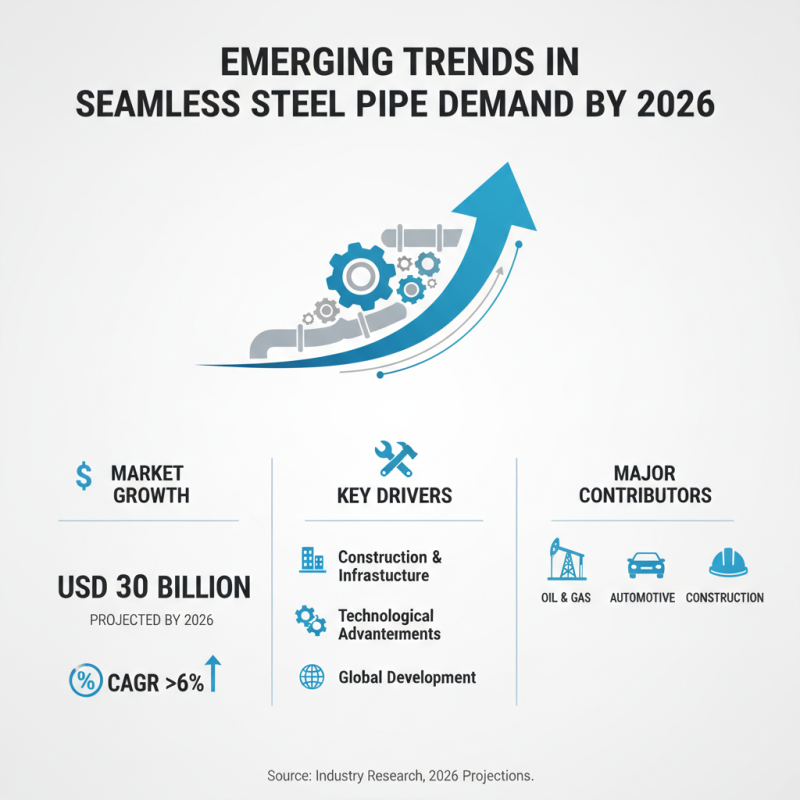
Emerging Trends in Seamless Steel Pipe Demand by 2026
The demand for seamless steel pipes is projected to rise significantly by 2026. Factors driving this trend include advancements in construction and infrastructure projects globally. According to industry research, the market is anticipated to reach USD 30 billion by 2026, growing at a CAGR of over 6%. Key sectors such as oil and gas, automotive, and construction are major contributors to this growth.
Emerging markets are expanding their investments in infrastructure. Countries in Asia-Pacific show the highest growth rates. Their increasing urbanization and population drives the need for durable materials, like seamless steel pipes. Data shows that nearly 60% of the global demand will come from developing regions. This indicates a shift in focus for manufacturers looking to supply these markets.
**Tip:** Consider investing in advanced technologies to enhance production efficiency. Automation can reduce costs and improve product quality.
Sustainability is becoming essential. Eco-friendly practices are gaining traction. Companies must adapt to these changing preferences. They may face challenges in sourcing raw materials responsibly. Therefore, evaluating supply chains is critical for success.
**Tip:** Regularly review industry reports for the latest trends. Being informed helps businesses stay competitive.
Key Players in the Global Seamless Steel Pipe Market
The seamless steel pipe market is evolving rapidly. Various key players contribute to its growth. Their expertise shapes industry standards. Companies invest in advanced technologies. Innovation drives efficiency and quality. This trend is crucial for meeting global demand.
Emerging markets show increasing interest. Regional players are enhancing their capabilities. They focus on sustainable practices. The emphasis is on reducing environmental impact. However, some manufacturers struggle to meet stringent regulations. This presents both challenges and opportunities.
Quality control remains a vital aspect. Companies must ensure their products meet international standards. Yet, variations in quality can occur. Buyers need to conduct thorough evaluations. Trust in suppliers is essential. Building strong relationships fosters reliability in the market.
Innovative Technologies Shaping Seamless Steel Pipe Production
Innovative technologies are reshaping the production of seamless steel pipes. Advanced manufacturing techniques, such as precision tube rolling and automated welding, have emerged. These technologies enable faster production cycles and improved quality control. With automation, the risk of human error diminishes. This leads to a more reliable product.
Additionally, enhanced materials science plays a crucial role. New alloys and coatings are developed to improve corrosion resistance. Such innovations increase the lifespan of seamless pipes, making them suitable for harsh environments. The integration of digital tools also enhances monitoring processes. Real-time data analysis aids in identifying potential defects early.
However, challenges remain in adopting these technologies universally. Not all manufacturers possess the resources for such advancements. Smaller firms may struggle to keep pace. Reflecting on this gap is essential for future growth. Understanding the complexities of implementing new tech is vital, particularly in diverse market conditions. Innovation must be balanced with accessibility for all players in the industry.
Top Seamless Steel Pipes for Global Buyers 2026
| Pipe Size (inches) |
Standard |
Material Grade |
Wall Thickness (mm) |
Applications |
| 2 |
ASTM A106 |
Grade B |
3.2 |
Oil and Gas |
| 4 |
API 5L |
X42 |
5.6 |
Water Transmission |
| 6 |
ASTM A333 |
Grade 6 |
7.0 |
Cryogenic Applications |
| 8 |
ASTM A53 |
Grade A |
4.0 |
Structural Applications |
| 10 |
DIN 2391 |
ST35 |
2.0 |
Automotive Components |
Regional Analysis of Seamless Steel Pipe Consumption and Supply
In recent years, the consumption and supply of seamless steel pipes have fluctuated across various regions. Asia Pacific remains a dominant player in this market. Countries like China and India show significant increases in demand. Their rapid industrial growth drives this trend. Steel pipes are essential for infrastructure, oil, and gas sectors.
North America and Europe follow closely, but they face challenges. Aging infrastructure requires upgrades, but budget constraints limit new projects. This creates a paradox where demand exists, yet actual consumption lags. Emerging markets are also stepping into the spotlight. Latin America and Africa are seeing rising investments in construction and energy.
Despite opportunities, the market must address supply chain issues. Fluctuating raw material costs impact production. Companies need to be adaptable to maintain reliability. The market could benefit from technological advancements to optimize production. Understanding regional differences in consumption patterns will be crucial for future strategies.
Environmental Considerations and Sustainability in Steel Pipe Manufacturing
Sustainability plays a critical role in steel pipe manufacturing. The industry faces pressure to reduce its environmental impact. Techniques like recycling scrap steel and optimizing production processes can minimize waste. Manufacturers are increasingly adopting eco-friendly practices. These changes reduce energy consumption and carbon emissions.
Tips for manufacturers include investing in renewable energy. This can significantly lower carbon footprints. Engaging with local communities helps ensure sustainable sourcing of materials. Transparency in production processes builds trust among consumers. It also encourages a shift towards greener practices.
Several challenges remain. The lifecycle of steel pipes is often overlooked. Manufacturers must consider the environmental impact from production to disposal. Innovation in materials can lead to more durable and sustainable products. This sector must continue evolving to meet global environmental standards.
Top Seamless Steel Pipes for Global Buyers 2026
This chart illustrates the estimated global demand for seamless steel pipes across various sectors in 2026, emphasizing environmental considerations and sustainability in manufacturing practices.