Who Are Top Stainless Seamless Pipe Manufacturers in China?

China is a major sourcing destination for Stainless Seamless Pipe, but a polished website is not proof of manufacturing capability. Buyers need to compare more than price. Product consistency, production control, and clear documentation matter when pipes must perform under pressure, heat, or corrosive conditions.

This guide examines how to identify leading Chinese manufacturers and what to verify before requesting a quotation. Useful checks include available steel grades, pipe dimensions, production methods, inspection procedures, and batch traceability. Ask for relevant test reports and confirm that certificates match the offered material and order. Details matter. A sample pipe may look sound while its records tell a different story.

Supplier rankings can be useful starting points, not final decisions. A company’s actual suitability depends on your specification, order volume, delivery schedule, and required quality controls. Consider factory experience, export support, communication, and the ability to explain deviations clearly. Claims about capacity or certifications deserve independent confirmation. That takes time. It can also prevent costly misunderstandings. The companies discussed here should therefore be assessed against verifiable evidence, not broad promises alone. Buyers should still define acceptance criteria before placing an order. A careful comparison will reveal which supplier fits the application, rather than merely which one appears largest.
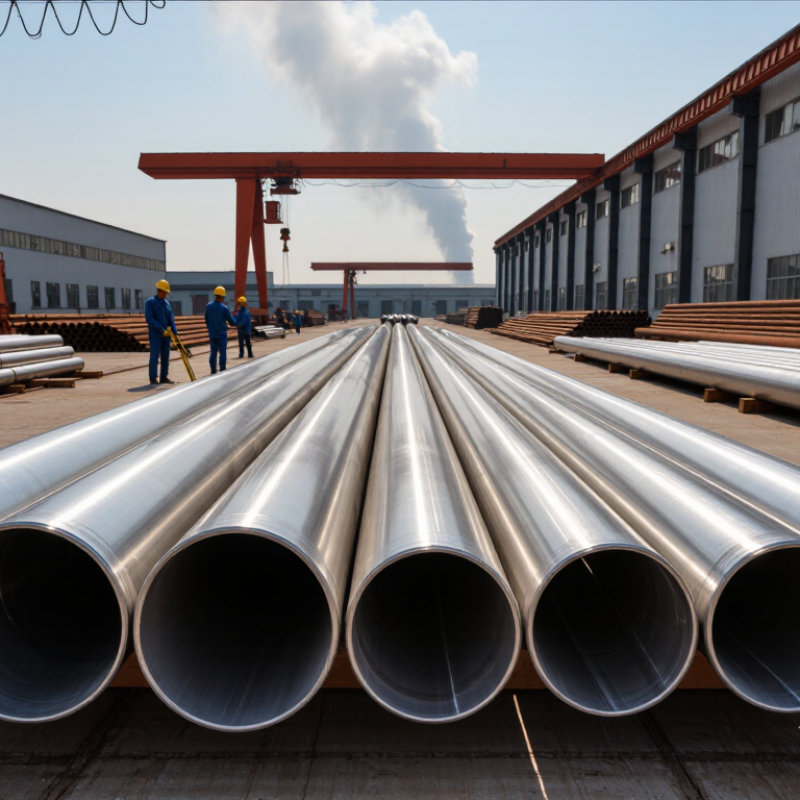
Who Are Top Stainless Seamless Pipe Manufacturers in China?

What Stainless Steel Seamless Pipes Are and Where They Are Used

Stainless steel seamless pipes are hollow tubes made without a longitudinal weld. Manufacturers typically pierce a solid billet, then roll or draw it into the required diameter and wall thickness. The absence of a weld can be useful where uniformity matters, but it does not make every pipe suitable for every duty. Grade, dimensions, heat treatment, and inspection all affect performance.

These pipes carry fluids and gases in chemical processing, power generation, and oil and gas facilities. They also appear in heat exchangers, where a bundle of narrow tubes transfers heat between fluids. In food and pharmaceutical plants, smooth internal surfaces can support cleaning and help limit residue buildup. A pipe may look polished outside. Its service conditions still matter.

Stainless steel resists corrosion through a chromium-rich surface layer, yet resistance varies by alloy and environment. Chlorides, high temperatures, and stagnant liquid can create problems in some settings. That detail is easy to miss. Before choosing a pipe, engineers consider pressure, temperature, fluid chemistry, connection type, and inspection requirements. A polished finish alone is not proof of suitability. Specifications and test records deserve a careful review.


How China’s Seamless Pipe Manufacturing Industry Is Structured

China’s seamless pipe industry is a network of specialized producers, not a single production model. Some mills control several stages, from steelmaking and billet preparation to piercing, rolling, and finishing. Others focus on pipe conversion, heat treatment, or precision cold drawing. The structure varies by region and product range. It is not perfectly neat.

Production often begins with a solid steel billet, heated and pierced to form a hollow shell. Rolling sets the pipe’s dimensions, while cold drawing can improve surface finish and dimensional accuracy. Heat treatment may adjust mechanical properties for a specified application. On the shop floor, operators check wall thickness, straightness, and surface condition. Small variations matter.

Testing and documentation connect the factory to the buyer. Depending on the order, checks can include chemical analysis, tensile testing, and nondestructive examination. Export and domestic distribution channels then link manufacturers with stockists, fabricators, and end users. A supplier’s capabilities should be assessed against the required grade, dimensions, inspection plan, and delivery terms. Capacity alone tells little. Specifications can still be interpreted differently, so clear technical communication remains essential.

How Leading Chinese Manufacturers Are Evaluated

Evaluating a stainless seamless pipe manufacturer starts with the production record, not a polished catalogue. World Stainless, in its Stainless Steel in Figures 2024 report, recorded 58.4 million tonnes of global stainless steel melt-shop production in 2023; China produced about 36.7 million tonnes. That scale creates broad sourcing options, but it does not prove that a particular mill controls alloy chemistry, heat treatment, or wall thickness consistently.

Ask for traceable mill test certificates linking each pipe to its heat number and test results. Then check whether the stated grade and dimensions match the purchase specification. For a sample, inspect surface finish and measure outside diameter and wall thickness at several points. Depending on the application and agreed standard, review hydrostatic or nondestructive test records, such as ultrasonic testing. Verify that the laboratory’s accreditation covers the relevant tests; a certificate alone is not enough. Paperwork is not proof.

Site audits can reveal practical details: segregated material storage, calibrated gauges, and records that follow a pipe through cutting and packing. Compare these findings with delivery performance and the supplier’s process for handling rejected material. Be cautious when reports show only factory-wide capacity or broad quality claims. They may not reflect the line making your order. Even a careful audit has limits, so retain inspection rights and define acceptance criteria before production.

How Chinese Stainless Seamless Pipe Manufacturers Can Be Evaluated

Illustrative evaluation weights for comparing manufacturers—not company scores or a ranking.

The criteria reflect practical checks used in supplier assessment: applicable standards and certifications, inspection and testing records, production capability, material traceability, and delivery performance. The percentages are suggested weights for a comparison framework, not measured industry data. Verify each item against current documents and independent inspection evidence.

Key Production Standards and Quality Control Practices

Chinese stainless seamless pipe manufacturers should be assessed against the standard named in the purchase specification, not a generic claim of compliance. ASTM A312 covers austenitic stainless steel pipe, while ASTM A790 addresses duplex grades; EN 10216-5 is another relevant specification for stainless steel tubes. Buyers should confirm the grade, dimensions, delivery condition, and current standard edition before production begins. Details matter.

Quality control starts with traceable raw materials. Heat numbers should link incoming billets to finished pipe and inspection records. Positive material identification can help verify alloy composition, but it does not replace laboratory testing or full certification. Dimensional checks should cover outside diameter, wall thickness, length, and straightness. Surface inspection matters too: scale, scratches, or visible laps may need investigation rather than a quick polish.

For pressure service, manufacturers may use hydrostatic testing or approved non-destructive examination, depending on the order requirements. Ask for test procedures, acceptance criteria, and records—not just a certificate. A paper trail is useful, but it cannot reveal every handling mark after inspection. Even a careful system has blind spots. Independent inspection at key production stages can provide another check, though it adds time and cost. Quality claims are strongest when the mill can show how each result was measured and tied to the specific pipe lot.

Who Are Top Stainless Seamless Pipe Manufacturers in China? - Key Production Standards and Quality Control Practices

A standards-focused overview of common requirements and quality checks for stainless steel seamless pipe. Applicable requirements depend on the product grade, dimensions, intended service, purchase order, and specified standard edition.

Area Relevant standard or reference What it covers Typical production or quality-control practice Evidence to review
Product specification ASTM A312/A312M; GB/T 14976 ASTM A312/A312M covers seamless, welded, and heavily cold-worked austenitic stainless steel pipe for specified high-temperature and general corrosive service. GB/T 14976 covers stainless steel seamless tubes for fluid transport. Confirm the ordered product form, grade, dimensions, delivery condition, and standard edition before production. Do not assume different standards are interchangeable. Purchase order, approved technical specification, and material test certificate identifying the applicable standard and grade.
Pressure-service requirements ASTM A999/A999M; EN 10216-5, where specified ASTM A999/A999M provides general requirements for alloy and stainless steel pipe; EN 10216-5 specifies stainless steel tubes for pressure purposes. Check that supplementary requirements, inspection level, test method, and acceptance criteria are stated in the order where needed. Order review records, inspection and test plan, and reports showing the requirements actually applied.
Chemical composition The selected product standard and grade specification Grade-specific limits for elements such as chromium, nickel, molybdenum, carbon, and other specified constituents. Verify heat chemistry against the ordered grade; use positive material identification (PMI) when required by the specification, purchaser, or service conditions. Heat analysis and, when specified, product analysis or PMI records linked to the pipe heat or lot.
Heat treatment Applicable product standard and grade-specific requirements Delivery condition and heat-treatment requirements vary by grade and specification. Austenitic stainless products commonly require solution treatment when required by the governing standard. Control the specified heat-treatment cycle and maintain traceable furnace records; avoid applying one temperature or cycle to every grade. Heat-treatment charts or electronic records, furnace identification, and batch traceability.
Dimensions and visual condition Dimensional tolerances in the ordered product standard Specified outside diameter, wall thickness, length, tolerances, and surface condition. Measure dimensions using suitable calibrated instruments and inspect accessible surfaces for relevant defects. Acceptance limits must come from the governing specification. Dimensional inspection records, calibration status, and visual-inspection results.
Mechanical testing Applicable product standard and referenced test methods Specified mechanical properties and tests can include tensile, hardness, and flattening or other tests, depending on the product standard, grade, and order. Take and test samples at the required frequency; compare results with the exact acceptance criteria for the ordered product. Laboratory reports identifying the test method, sample or lot, results, and acceptance limits.
Leak-tightness and nondestructive examination Requirements and permitted methods in the applicable product standard The specification may require a hydrostatic test or an allowed nondestructive electric test; method and acceptance criteria are standard- and order-dependent. Apply the required test method and documented procedure. Do not assume every order requires both hydrostatic and nondestructive testing. Test reports showing method, equipment or procedure, inspected lot, and results.
Traceability and release Product-standard marking and purchaser documentation requirements Identification and documentation connecting finished pipes with their material heat, grade, inspection records, and order. Maintain heat or lot traceability through production, testing, marking, and dispatch; review the final document package before release. Material test certificate, inspection records, marking details, and shipment documentation.

Note: Standards may be revised. Confirm the edition, grade, dimensions, testing scope, and acceptance criteria in the contract documents; the checks listed here are general guidance and do not replace the applicable specification.

How to Select a Chinese Seamless Pipe Manufacturer

Choosing a Chinese seamless pipe manufacturer begins with your service conditions, not a supplier ranking. Define the required grade, outside diameter, wall thickness, length, end finish, and operating temperature before comparing quotes. Ask how the pipe is made, heat-treated, and inspected. Details matter. Request a sample material test certificate, then check that its heat number matches the pipe markings and packing list. For demanding service, confirm the specified nondestructive tests and how results are recorded.

Compare each quotation against your written specification, including tolerances, packaging, delivery terms, and inspection scope. Ask for recent quality records and a clear process for handling nonconforming products. A factory visit can reveal practical details, such as whether finished pipes are stored apart from raw stock. If an in-person visit is not possible, request a live video walkthrough or independent inspection. Check production capacity against your order size and schedule, rather than relying on a promised lead time alone. One point is easy to overlook: a polished certificate does not prove every pipe was checked. Verify traceability from production records through shipment, and clarify any missing evidence before placing an order.