How to Choose the Right Stainless Steel Elbow for Your Project?
Choosing the right Stainless Steel Elbow for your project can significantly impact its success. Expert Mark Johnson, a renowned engineer in the pipeline industry, states, "The right elbow can make or break your system." This highlights the importance of careful selection.
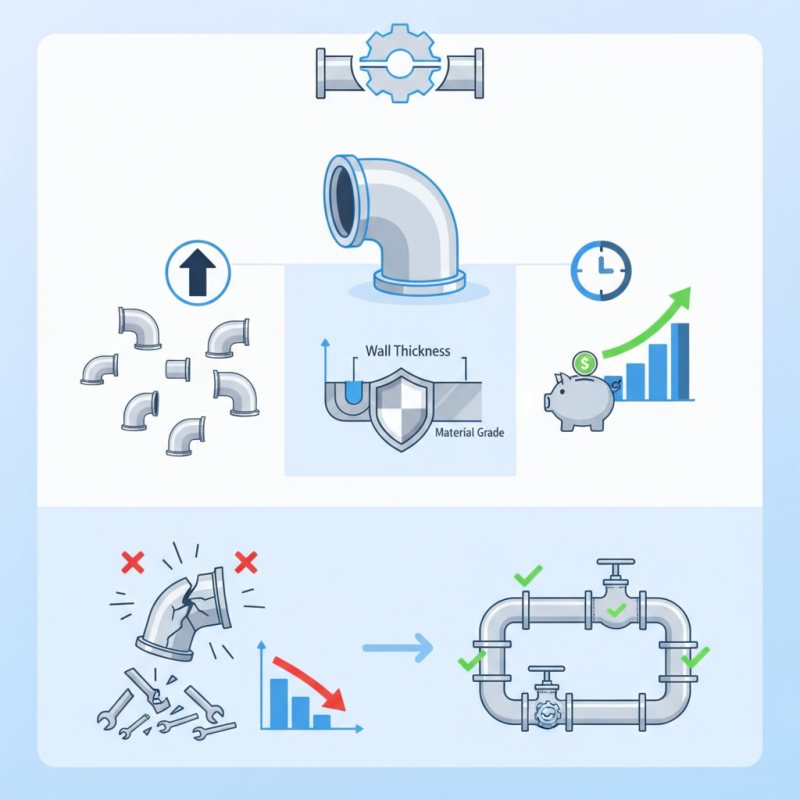
Stainless Steel Elbows come in various types and sizes. Understanding each type’s role is essential for your project. For example, a 90-degree elbow is often used to change direction. However, some might overlook the significance of wall thickness and material grades. These factors play a crucial role in durability and performance.
Many projects fail due to improper elbow selection. It’s easy to assume any elbow will suffice. Yet, that assumption can lead to costly mistakes. Reflecting on these choices is vital for future projects. An informed decision on Stainless Steel Elbows saves time and resources in the long run.
Understanding Different Types of Stainless Steel Elbows
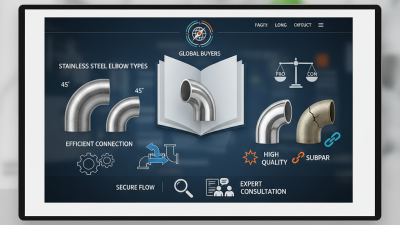
When selecting stainless steel elbows, it’s crucial to understand the types available. Elbows come in various angles, such as 45-degree and 90-degree fittings. Each type serves a distinct purpose in piping systems. A 90-degree elbow allows for a sharp turn, while a 45-degree elbow offers a more gradual bend. Choosing the wrong angle can lead to inefficient flow and increased pressure loss.
Material is equally important. Different grades, like 304 and 316 stainless steel, offer varying resistance to corrosion. Grade 316 provides superior durability, particularly in marine environments. However, it comes at a higher cost. Assessing the environment and intended use is essential. Sometimes, opting for a less expensive grade could lead to premature failure, necessitating a second purchase.
Additionally, the diameter of the elbow must match the piping system precisely. An incorrect size can result in leaks or be challenging to connect. The installation process itself can be tricky. A professional may be needed for proper fitting. Review your project requirements carefully, as small oversights can have significant implications down the line.
Comparison of Different Types of Stainless Steel Elbows
Factors to Consider When Selecting Stainless Steel Elbows
When selecting stainless steel elbows, several factors come into play. The type of application is crucial. For high-pressure systems, you may require thicker elbows to withstand the stress. Consider the environment too. Corrosive substances may demand specific stainless steel grades for durability.
Material grade influences performance. Common grades include 304 and 316. The latter offers better corrosion resistance, ideal for marine applications. Yet, 304 can be sufficient for indoor settings. Also, size matters. Ensure the elbow fits with your piping system. Mismatched sizes can lead to leaks or pressure drops.
Tips: Always consult with industry professionals. They can offer insights on the best materials. Perform stress tests when possible. This verifies that the elbow can handle your specific needs. Don't forget to review installation procedures. Proper installation is vital for longevity and performance.
Determining the Right Size and Angle for Your Project
When selecting the right stainless steel elbow for your project, the size and angle are crucial factors. These elements influence flow efficiency and fitting compatibility. Start by measuring the diameter of the pipes you’re using. Common sizes include 1 inch, 2 inches, and larger. Make sure to get the measurements accurate; even a slight error can lead to leaks.
Next, consider the elbow's angle. The most common angles are 45 and 90 degrees. Choosing the right angle is essential for optimal fluid flow. A 45-degree elbow minimizes resistance, which can be important in high-pressure systems. A 90-degree elbow can create turbulence, which may not be ideal for every application. Reflect on what you need; sometimes, a gentler curve is better.
Don’t forget about material thickness. A thicker wall can provide durability but might not fit every application. Assess the environment where the elbow will be used. External elements like temperature and pressure can impact performance. If unsure, consult industry standards or a professional to guide your choice. Making hurried decisions without thorough consideration can lead to costly mistakes down the line.
How to Choose the Right Stainless Steel Elbow for Your Project?
| Dimension |
Angle |
Material Grade |
Size Range (inches) |
Application |
| 1/2" |
90° |
304 |
1/2" to 4" |
Plumbing |
| 3/4" |
45° |
316 |
3/4" to 6" |
Food Industry |
| 1" |
180° |
304L |
1" to 8" |
HVAC |
| 2" |
90° |
321 |
2" to 10" |
Chemical Processing |
| 3" |
45° |
316L |
3" to 12" |
Marine Applications |
Evaluating the Quality and Grade of Stainless Steel
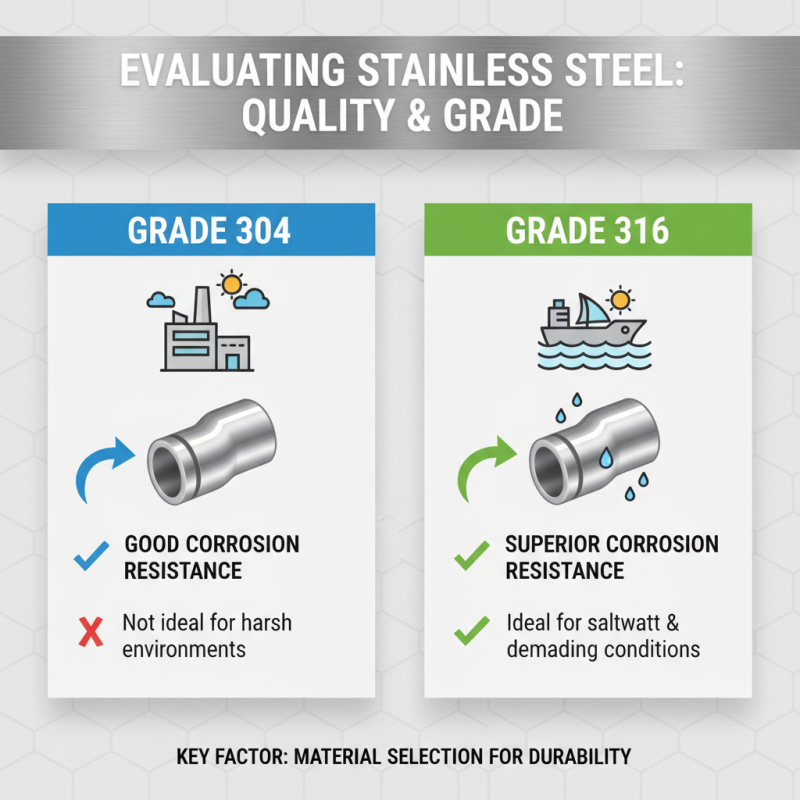
When selecting the right stainless steel elbow, the quality and grade of the material are critical. Stainless steel is categorized by several grades, each with unique properties. The most common grades are 304 and 316. Grade 304 offers good corrosion resistance, making it suitable for general use. However, for more demanding conditions, such as exposure to saltwater, grade 316 is preferable due to its higher resistance to corrosion.
Understanding the specific needs of your project is important. The environment and the type of fluid flowing through the elbow can affect performance. Conduct thorough research on the grade specifications and their applications. Even minor differences in composition can impact longevity and reliability. In some cases, lower-grade stainless steel may be more affordable. But opting for cheaper materials can lead to issues down the line, such as leaks or replacements.
It is essential to evaluate suppliers and their quality control processes. Ask about the testing methods they employ. Documentation, such as material certifications, helps ensure you are receiving quality products. Reflecting on the potential issues arising from poor material choices can save both time and resources in the long run. The right stainless steel elbow can greatly enhance the durability and efficiency of your project.
Applications and Common Use Cases for Stainless Steel Elbows
Stainless steel elbows play a crucial role in various applications. In plumbing, these fittings connect pipes in tight spaces. They help to change the direction of water flow smoothly. Different angles are essential for effective water distribution. For instance, a 90-degree elbow is often used in residential plumbing to redirect water under sinks or through walls.
In industrial settings, stainless steel elbows are vital for transporting chemicals and gases. They withstand high pressures and resist corrosion. This durability ensures safe operation in factories and refineries. However, not all projects require heavy-duty elbows. Sometimes, a lighter option may suffice. This can lead to cost savings, but it also raises concerns about longevity and safety.
Choosing the right elbow requires understanding specific needs. A poorly chosen fitting can lead to leaks or failures. Considerations include pipe size, flow rate, and material compatibility. Always consult with a knowledgeable professional when in doubt. Their experience can help prevent costly mistakes in your project.