Top Brass Elbow Fittings Manufacturers and Suppliers

Choosing reliable Brass Elbow Fittings manufacturers and suppliers requires more than comparing prices. These fittings guide pipes around corners, often inside walls, plant rooms, and compact machinery. A small thread mismatch can cause leakage, rework, or costly downtime. This guide examines suppliers through material quality, production experience, dimensional accuracy, and after-sales reliability.

Experienced manufacturers should clearly identify brass grades, connection types, elbow angles, and pressure ratings. They should also explain whether products support potable water, compressed air, gas, or industrial service. Relevant inspection records may include thread gauges, wall-thickness checks, pressure testing, and corrosion evaluation. Certifications matter, but documents alone are not enough. Sample inspection still matters. Look closely at casting marks, thread cleanliness, surface plating, and burr removal. A dependable supplier can provide traceability from raw material to finished shipment.

Supplier directories can simplify research, yet catalogue photographs may hide important differences. Some listings use “brass” too broadly. That deserves caution. Buyers should request technical drawings, tolerances, test reports, packaging details, and realistic production lead times. Communication quality also reveals manufacturing discipline. Clear answers usually reduce ordering mistakes. Vague promises do not.

This overview highlights leading manufacturers and suppliers based on practical purchasing factors. It considers product consistency, customization capability, export experience, and customer support. No supplier is perfect, and requirements vary by project. A fitting suitable for household plumbing may fail in a demanding industrial environment. Careful comparison remains essential.

Top Brass Elbow Fittings Manufacturers and Suppliers

What Are Brass Elbow Fittings and Where Are They Used?

What Are Brass Elbow Fittings and Where Are They Used?

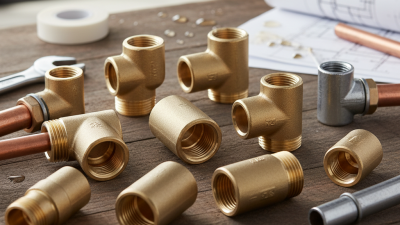
Brass elbow fittings are curved connectors that change pipe direction, commonly by 45 or 90 degrees. They join threaded or compatible pipes while helping control alignment in tight spaces. Brass is a copper-zinc alloy, and the Copper Development Association reports that many plumbing brasses contain about 60% copper and 40% zinc. This balance offers useful strength, corrosion resistance, and machinability. Still, brass is not ideal for every chemical or temperature condition. That detail is often overlooked.

These fittings appear in drinking-water lines, compressed-air systems, gas distribution, heating equipment, and irrigation networks. A 2024 Grand View Research analysis estimates the global pipe fittings market will expand at roughly 4.7% annually through 2030. Demand is supported by building maintenance, industrial upgrades, and water infrastructure renewal. In practical installations, an elbow can prevent a pipe from bending sharply behind a boiler or inside a cabinet. However, poor thread matching can cause leaks, even when the fitting looks well made.

Tips: Check the pipe standard, thread type, pressure rating, and temperature range before purchase. Use approved thread sealant where required. Avoid over-tightening; it can damage threads or split weaker components. Inspect the joint after pressurizing the system. A small drip deserves attention. Manufacturers and suppliers should provide traceability, dimensional data, and material documentation, preferably aligned with applicable ASTM or ASME requirements.

Key Features That Define High-Quality Brass Elbow Fittings

High-quality brass elbow fittings are defined by more than a polished surface. In field installations, the metal must resist corrosion, pressure changes, and repeated tightening. Lead-free or low-lead brass is often preferred for potable-water applications, subject to local requirements. A reliable manufacturer should provide alloy details, dimensional tolerances, pressure ratings, and traceable inspection records. The elbow angle must remain accurate, or pipe alignment becomes difficult. Threads should feel clean, even, and sharply formed. Small defects matter.

Experienced suppliers test fittings for leaks, burst pressure, and thread compatibility before shipment. They also control machining, deburring, and surface finishing at each production stage. A smooth internal passage reduces turbulence and helps limit deposits. Wall thickness should be consistent around the bend, especially where stress concentrates. Material certificates and batch identification improve accountability when problems appear later. Still, specifications alone can mislead. Actual performance depends on installation quality, water chemistry, temperature, and vibration.

Tips: Compare samples, not only catalog photos. Check threads with a matching gauge, and inspect the bore under bright light. Ask how pressure data was measured. Confirm the fitting matches the pipe standard and working temperature. Avoid forcing a misaligned joint; it can damage threads and create a hidden leak. Attractive fittings can still fail when installers overtighten them. That mistake is easy to repeat. A careful supplier should explain torque guidance, packaging protection, and replacement procedures clearly.

How to Evaluate Brass Elbow Fittings Manufacturers

Evaluating brass elbow fittings manufacturers requires more than comparing unit prices. Check the alloy certificate, dimensional drawings, pressure ratings, and thread standard for every model. EN 12165 covers wrought and cast copper alloys, while ASME B16.15 addresses cast copper-alloy threaded fittings. A reliable manufacturer should identify the applicable standard clearly, not hide behind vague claims.

Ask for recent batch records, not sample paperwork. The ISO Survey reports more than one million ISO 9001 certificates worldwide, yet certification alone does not prove fitting quality. Request hydrostatic test results, leakage limits, material traceability, and calibration records. Inspect a sample physically: threads should engage smoothly, ports should be clean, and the elbow should show no visible porosity. Small details matter.

I have seen polished fittings fail because the plating looked excellent. The real problem was inconsistent wall thickness. Ask how the factory controls casting, machining, and final inspection. Review nonconformance rates and corrective actions; honest suppliers can discuss failures without defensiveness. The World Bank’s Commodity Markets Outlook regularly shows volatility in copper prices, so transparent alloy sourcing and price adjustments deserve attention. I would also test fittings under the actual temperature and pressure conditions. Laboratory results may not mirror installation reality. That gap deserves reflection.

Top Brass Elbow Fittings Manufacturers and Suppliers - How to Evaluate Brass Elbow Fittings Manufacturers

Evaluation Dimension Technical Benchmark or Relevant Requirement Recommended Evidence to Request Why It Matters
Material composition Confirm the copper-zinc alloy designation, such as C36000 free-cutting brass, C37700 forging brass, or an equivalent grade required by the application. Composition should be verified against the applicable ASTM, EN, or national material standard. Material certificate, heat or batch number, and an independent PMI or chemical-analysis report. Alloy chemistry affects machinability, corrosion resistance, strength, dezincification resistance, and regulatory suitability.
Applicable product standard For forged copper-alloy pressure fittings, EN 1254-1 and EN 1254-4 may apply depending on the connection type. ASTM B16/B16M covers wrought copper and copper-alloy pressure fittings. The selected standard must match the product design and market. Product drawings, standard references, conformity declaration, and clause-by-clause compliance checklist. A clear standard prevents mismatches in dimensions, connections, pressure testing, and acceptance criteria.
Connection types Common options include female or male threaded ends, solder or brazing sockets, press connections, and compression ends. Thread forms may include NPT, BSPP, or BSPT; these are not automatically interchangeable. Thread gauges, connection drawings, dimensional inspection records, and sample fit tests with mating components. Incorrect thread form, pitch, or connection geometry can cause leakage and installation failure.
Nominal size range Typical commercial brass elbows are offered in nominal sizes from approximately 1/8 inch to 4 inches, or metric sizes commonly ranging from about 6 mm to 108 mm. Actual availability depends on the connection standard and product design. Current size chart, CAD files, dimensional drawings, and first-article inspection report. A broad, consistent size range supports system compatibility and reduces the need for adapters.
Elbow angle and geometry The most common configuration is a 90-degree elbow; 45-degree elbows are also widely used. Center-to-end dimensions, wall thickness, and bend radius should be controlled according to the applicable product standard or approved drawing. Coordinate-measuring-machine report, angle gauge results, and approved engineering drawings. Accurate geometry improves installation fit, flow routing, and repeatability between production batches.
Pressure rating Pressure capability must be stated for the exact alloy, size, connection, temperature, and applicable standard. Do not compare nominal pressure ratings without confirming the test method and service temperature. Pressure-rating table, design calculations, hydrostatic or pneumatic test procedure, and test certificates. The same fitting may have different allowable working pressures under different temperature and connection conditions.
Pressure and leakage testing Testing should follow the specified product standard or purchaser requirement. Test records should identify pressure, duration, medium, temperature, sample size, and acceptance criteria. Batch-level test reports with traceable lot numbers and calibrated pressure gauges. Documented testing provides evidence that fittings are leak-tight and suitable for the intended service.
Dimensional consistency Critical dimensions include thread diameter and pitch, socket depth, wall thickness, center-to-end distance, outside diameter, and angular alignment. Tolerances should be defined on the approved drawing or product standard. Inspection plan, calibrated gauges, sampling plan, and statistical process-control records. Stable dimensions reduce assembly variation, rework, and field leakage.
Corrosion and dezincification resistance For potable-water or aggressive-water applications, specify a suitable low-lead and dezincification-resistant alloy where required by local regulations and the application standard. Alloy selection must be verified rather than assumed from the term “brass.” Chemical analysis, dezincification-resistance test results where applicable, and regulatory compliance documents. Material degradation can reduce wall thickness, contaminate water, and shorten service life.
Surface finish and plating Surfaces should be free from cracks, laps, harmful burrs, deep scratches, and visible leakage paths. Nickel or chrome plating, if specified, should have defined thickness, adhesion, and appearance requirements. Visual-inspection standard, coating-thickness readings, adhesion tests, and nonconformance records. Good finishing supports corrosion protection, sealing performance, appearance, and safe handling.
Manufacturing capability Relevant processes may include hot forging, gravity or pressure casting, CNC machining, deburring, heat treatment, plating, and automated inspection. The process should be appropriate for the selected alloy and fitting design. Process flow chart, equipment list, production-capacity statement, and process-control plan. Suitable process control improves mechanical integrity, dimensional stability, and production scalability.
Quality-management system An ISO 9001-certified quality-management system is a useful baseline for controlled purchasing, production, inspection, corrective action, and record retention. Certification should be current and within scope. Valid certificate, certification scope, recent audit findings, and corrective-action process. A structured quality system makes supplier performance more measurable and repeatable.
Traceability Each production lot should be traceable to raw material, production date, inspection results, and shipment documentation through markings, labels, or controlled records. Lot-traceability procedure, sample labels, material certificates, and retention-period policy. Traceability supports recalls, root-cause analysis, warranty decisions, and regulatory investigations.
Regulatory and application compliance For drinking-water, gas, fire-protection, or other regulated uses, verify the specific approvals required in the destination market. Compliance is application- and jurisdiction-specific. Current approval certificates, declarations of conformity, test reports, and permitted-use statements. A fitting suitable for general plumbing may not be legally approved for potable water, gas, or fire systems.
Packaging and corrosion protection Packaging should prevent impact, thread damage, contamination, and moisture exposure during storage and transport. Thread protectors or separators are recommended for machined connection surfaces. Packaging specification, transport simulation or handling procedure, and incoming-inspection photographs. Proper packaging preserves sealing surfaces and reduces transit-related defects.
Commercial and supply performance Evaluate minimum order quantity, sample availability, production lead time, capacity during peak demand, spare-parts policy, payment terms, and documented on-time delivery performance. Written quotation, capacity plan, delivery records, sample policy, and quality-claim response procedure. Commercial reliability affects total procurement cost and continuity of supply.
Evaluation note: Compare suppliers using the same approved drawing, material grade, connection standard, test requirements, and delivery terms. Pressure ratings, regulatory approvals, and dimensional tolerances should always be confirmed for the exact fitting configuration.

Leading Supplier Types and Their Product Capabilities

Top Brass Elbow Fittings Manufacturers and Suppliers

Leading Supplier Types and Their Product Capabilities

Brass elbow fitting suppliers usually fall into four groups: manufacturers, distributors, custom fabricators, and online industrial sellers. Manufacturers often provide 45-degree and 90-degree elbows in several sizes, thread forms, and wall thicknesses. Their capabilities may include forging, machining, deburring, pressure testing, and batch traceability. Distributors focus on availability. They can supply common configurations quickly, especially for repair work and routine installation projects.

Custom fabricators support unusual dimensions, reduced openings, special thread combinations, or low-volume orders. This option suits equipment builders with limited installation space. However, customization can increase lead time and inspection requirements. Online suppliers may offer broad catalogs, technical drawings, and convenient comparison tools. Product quality still varies, so buyers should verify material composition, dimensional tolerances, working pressure, and applicable standards before ordering.

In practical purchasing, I check thread accuracy with a gauge and inspect sealing surfaces under direct light. Small burrs can damage seals or restrict flow. A reliable supplier should provide clear specifications, inspection records, and responsive technical support. Samples can reveal more than polished photographs. Price alone misleads. I have seen inexpensive elbows require replacement after poor thread engagement or inconsistent plating. Suppliers with stable production records, documented testing, and realistic delivery commitments usually reduce those risks, though no catalog removes the need for careful verification.

Top Brass Elbow Fittings Manufacturers and Suppliers

How to read this chart: The value 1 indicates that a connection or production capability is commonly offered by the supplier type, while 0 indicates that it is not usually a core offering. Threaded NPT and BSP connections, compression fittings, SAE flare fittings, solder connections, and CNC customization represent established brass elbow fitting product families used in plumbing, HVAC, fluid-control, and industrial applications. Actual availability depends on the supplier’s standards, tooling, size range, and certification portfolio.

How to Choose the Right Brass Elbow Fittings Supplier

Choosing the right brass elbow fittings supplier requires more than comparing unit prices. The supplier should understand water, gas, heating, or industrial applications. Ask about brass composition, thread standards, pressure ratings, and temperature limits. These details affect safety and service life.

Request recent test reports and material certificates. Reliable manufacturers should explain how they control casting, machining, polishing, and thread inspection. A serious supplier can provide samples with clear dimensions and consistent thread engagement. Check whether the elbow fits your pipes without excessive force. Small gaps can cause leaks later.

I once reviewed fittings that looked excellent but had rough internal passages. That flaw could restrict flow. It reminded me not to judge quality from surface finish alone. Ask for production photos, inspection records, and batch traceability. Confirm packaging before placing a large order. Individual caps can protect threads during transport.

Communication also reveals supplier experience. Can the sales engineer answer technical questions directly? Does the factory clarify tolerances instead of promising everything is perfect? Be cautious with vague claims. A dependable supplier discusses limitations openly. Delivery history matters too. Compare lead times, replacement procedures, and sample approval steps. The best choice may cost slightly more, but inconsistent fittings create greater expenses during installation and maintenance.