Choosing the right Wear Resistant Plate begins with understanding how wear actually occurs in the workplace. A quarry chute faces sliding abrasion, while a crusher liner may suffer impact, pressure, and repeated deformation. These conditions demand different steel properties.
Tribology expert J. F. Archard described a core principle: “The volume of wear is proportional to load and sliding distance, and inversely proportional to hardness.” His statement remains useful, but it is not the whole answer. Hardness matters. Toughness matters too. A very hard plate can resist scratching, yet crack under sudden impact. A tougher grade may survive heavy blows but wear faster under constant sliding.
In practical selection work, engineers compare hardness, impact resistance, plate thickness, welding needs, forming limits, and operating temperature. They also examine the failed component. The wear pattern often reveals more than a product brochure. Grooves suggest abrasion. Dents suggest impact. Warping may indicate heat or poor support.
There is no universal “best” Wear Resistant Plate. That answer sounds convenient, but it can be misleading. AR400, AR450, AR500, and proprietary alloy grades each serve different conditions. The best choice balances service life, fabrication cost, downtime, and safe installation.
This guide examines those trade-offs clearly. It connects laboratory ratings with real equipment performance. Some recommendations may remain uncertain without field data. That is worth admitting. Reliable engineering begins with evidence, not impressive numbers.
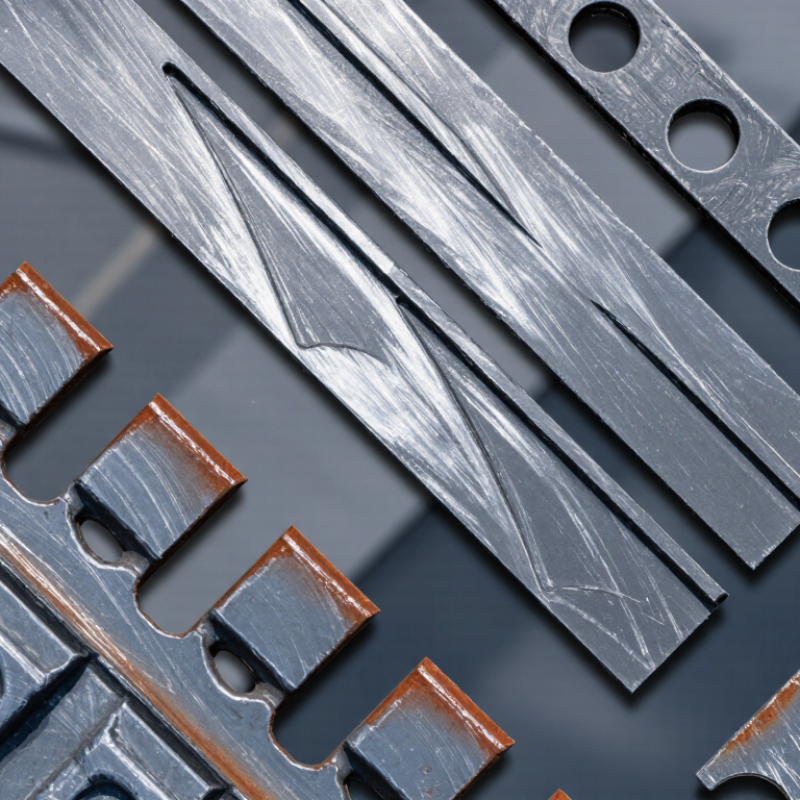
Wear-resistant plate is steel designed to resist material loss from abrasion, impact, or sliding contact. It is commonly used in hoppers, dump bodies, chutes, and mining equipment. In this context, HBW means Brinell hardness measured with a tungsten-carbide ball. A hardness above 250 HBW usually indicates stronger resistance to surface indentation and abrasive wear. Hardness is not everything.
Its composition normally includes carbon, manganese, silicon, and controlled alloying elements. Chromium, nickel, molybdenum, or boron may improve hardenability and toughness. Manufacturers usually apply quenching and tempering to create a hard surface with a more reliable internal structure. Thickness, cooling conditions, and heat treatment can change the final result. Two plates with similar chemistry may still perform differently.
The best type depends on the working condition. For intense sliding abrasion, a higher-hardness quenched-and-tempered plate may reduce wear effectively. For heavy impact, excessive hardness can increase cracking risk, so a tougher medium-hardness grade may be safer. An imperfect assumption is choosing the hardest plate automatically. In field inspections, surface hardness readings can also vary across one sheet. Check hardness distribution, impact requirements, plate thickness, and test certificates before selection. Fit matters.
Wear-resistant plate is carbon or alloy steel designed to withstand repeated abrasion from rock, sand, ore, and other harsh materials. Its AR rating usually indicates nominal Brinell hardness. AR400 measures about 400 HB, AR450 about 450 HB, and AR500 about 500 HB. Hardness matters, but it does not tell the whole story.
AR400 is often the practical choice for chutes, buckets, liners, and truck bodies. It offers a useful balance between wear resistance, impact tolerance, welding, and forming. AR450 provides greater surface hardness for more severe sliding abrasion. However, cutting and bending require tighter control. AR500 resists aggressive abrasion best among these three grades, especially where fine, hard particles repeatedly scrape the surface. It can be less forgiving under heavy impact. Harder is not always better.
Real selection depends on the failure pattern. In one quarry application, a liner wore thin quickly, yet nearby plates cracked around bolt holes. The problem was not simply insufficient hardness. Impact energy, plate thickness, support spacing, and joint design also mattered. AR500 may last longer against sand, but AR400 can survive large rock strikes more reliably. Engineers should review hardness test results, chemical data, and weld procedures before ordering. Plate thickness can vary too. Small differences matter. The “best” grade is the one matching the actual wear, impact, fabrication, and maintenance conditions.
| Comparison Dimension | AR400 | AR450 | AR500 |
|---|---|---|---|
| Basic Definition | A quenched-and-tempered abrasion-resistant steel plate with a nominal Brinell hardness of approximately 400 HBW. | A quenched-and-tempered abrasion-resistant steel plate with a nominal Brinell hardness of approximately 450 HBW. | A quenched-and-tempered abrasion-resistant steel plate with a nominal Brinell hardness of approximately 500 HBW. |
| Typical Brinell Hardness | Commonly specified around 360–440 HBW, depending on the applicable grade standard, thickness, and producer. | Commonly specified around 410–490 HBW, depending on the applicable grade standard, thickness, and producer. | Commonly specified around 470–530 HBW, depending on the applicable grade standard, thickness, and producer. |
| Relative Abrasion Resistance | Good resistance for general sliding, impact, and moderate-to-heavy abrasive service. | Very good resistance for more demanding abrasive conditions and longer replacement intervals. | Excellent resistance to severe sliding abrasion, especially where fine or hard particles cause rapid wear. |
| Relative Toughness and Impact Tolerance | Generally the most forgiving of the three grades for impact loading and fabrication. | Provides a balanced combination of hardness, wear life, and impact performance. | Usually less forgiving than AR400 under severe impact, sharp stress concentrations, or improper fabrication. |
| Forming and Bending | The easiest of the three grades to cold-form, subject to minimum bend-radius and tooling requirements. | More demanding than AR400; larger bend radii and higher forming forces are normally required. | The most difficult to cold-form; bending should follow the mill’s specified radius, direction, and procedure. |
| Welding Considerations | Generally the easiest to weld, but preheat, interpass temperature, consumable selection, and hydrogen control still matter. | Requires tighter control of heat input, preheat, interpass temperature, and hydrogen prevention than AR400. | Requires the greatest fabrication discipline; follow the material certificate and welding procedure carefully to reduce cracking risk. |
| Machining | Possible with suitable carbide tooling, rigid fixturing, controlled cutting parameters, and adequate tool cooling. | Machining is more difficult and generally causes faster tool wear than AR400. | The most difficult to machine; specialized carbide or suitable advanced tooling is commonly required. |
| Typical Applications | Dump bodies, truck beds, chutes, hoppers, liners, buckets, construction equipment, and general material-handling components. | Heavy-duty liners, screens, feeders, crushers, wear plates, mining equipment, and aggregate-handling systems. | High-wear liners, conveyor transfer points, mineral-processing equipment, screens, hoppers, and components exposed to severe sliding abrasion. |
| Best Choice When | The application needs a practical balance of wear resistance, toughness, weldability, formability, and cost. | The application requires more wear life than AR400 while retaining a reasonable level of toughness and fabricability. | Maximum resistance to severe sliding abrasion is the main priority and impact or forming demands are controlled. |
| Main Limitation | May wear faster than AR450 or AR500 in highly abrasive service. | Higher hardness can increase fabrication difficulty and reduce tolerance for severe impact compared with AR400. | Higher fabrication cost, lower formability, more demanding welding, and greater sensitivity to impact-related damage. |
| Selection Guidance | Choose when the equipment experiences mixed abrasion and impact, or when fabrication flexibility is important. | Choose when wear is significant but the component still requires a balanced level of toughness and manufacturability. | Choose when sliding abrasion dominates, replacement downtime is costly, and the component can be designed and fabricated for the higher hardness. |
What Is Wear Resistant Plate and Which Type Is Best?
Wear-resistant plate is engineered for surfaces exposed to sliding, impact, or abrasive particles. Its best type depends on the failure pattern, not only its strength. ASTM A514/A514M specifies a minimum yield strength of 690 MPa, or 100 ksi. Typical tensile strength ranges from 760 to 895 MPa, depending on the grade. This high strength can reduce plate thickness and equipment weight. However, A514 is a high-strength structural steel, not automatically a dedicated abrasion-resistant plate. That distinction matters.
The World Steel Association reported approximately 1.89 billion tonnes of crude steel production in 2023. Such scale highlights why longer service life matters in mining, construction, and bulk handling. Field inspections often reveal a practical problem: hardness alone does not predict every failure. Impact, welding heat, plate thickness, and poor alignment can shorten service life. Small cracks grow. I have seen strong plates fail early when drainage and material flow were ignored. The specification is useful, but application details still decide performance.
Tips: Confirm the actual abrasion mechanism before selecting A514. Request certified yield, tensile, chemistry, and hardness results. Compare them with the equipment designer’s requirements. Use qualified welding procedures, because uncontrolled heat can weaken the heat-affected zone. ASTM data provides confidence, but site testing and regular thickness measurements remain necessary.
Wear-resistant plate is steel designed to reduce material loss caused by abrasion, impact, or sliding contact. The best choice depends on the balance of hardness, toughness, weldability, forming requirements, and structural strength.
ASTM A514 provides a minimum yield strength of approximately 690 MPa for standard thicknesses up to 2.5 inches (63.5 mm), making it substantially stronger in yield than common structural grades. However, high yield strength alone does not determine abrasion resistance; dedicated wear grades are generally selected by their specified hardness and impact performance.
Values are representative minimum yield-strength requirements stated in ASTM A36, ASTM A572 Grade 50, ASTM A588, ASTM A514, and EN 10025-6 S690QL. Actual requirements can vary with product thickness, grade designation, and the applicable edition of the standard. For severe abrasion, compare the required hardness and impact toughness in addition to yield strength.
What Is Wear Resistant Plate and Which Type Is Best?
Choosing Plate by Hardness, Impact Energy, Thickness, and Operating Temperature
Wear-resistant plate is engineered to resist abrasion, impact, or both. The best type depends on the damage mechanism, not hardness alone. A plate with 400 Brinell hardness may handle sliding ore well, but it can perform poorly under repeated heavy impact. Hardness matters, yet excessive hardness can reduce toughness and complicate fabrication.
Impact energy should match the real service conditions. Use Charpy impact values tested at the lowest expected operating temperature. A very hard plate may crack when struck by large rocks or frozen material. This risk increases around holes, sharp corners, and poorly controlled welds. In practice, impact-resistant grades often provide safer performance where sudden loading dominates.
Thickness also changes selection. Thin plates may wear through quickly, while thick plates can increase weight and welding difficulty. Operators should check the actual wear allowance, load path, and support spacing. Temperature requires equal attention. Elevated heat can reduce hardness, while sub-zero conditions may expose weak toughness. Heat-resistant grades may be more suitable, but their wear performance is not always superior. There is no perfect plate. Field measurements, test certificates, and application data should guide the final choice, although service records are sometimes incomplete.
Wear resistant plate is engineered steel designed to reduce material loss from abrasion, impact, or sliding contact. The best type depends on the working condition, not hardness alone.
Quenched and tempered abrasion-resistant plate suits excavator buckets, truck bodies, and construction blades. It offers a useful balance between hardness, toughness, and weldability. High-chromium overlay plate performs better in mining chutes and hoppers carrying sharp rock. It resists severe sliding abrasion, but its welded surface may be less suitable for heavy impact. Impact changes everything.
In practical maintenance records, mining liners may last six to eighteen months, depending on rock size, moisture, and feed speed. Material-handling floors and transfer points often reach twelve to thirty-six months under moderate abrasion. Construction attachments may require earlier replacement because digging creates repeated shock loads.
These figures are working ranges, not promises. Plate thickness, support spacing, weld quality, and loading patterns can change service life sharply. A neat number can mislead.
Tips: Inspect wear at fixed intervals and record thickness loss in millimeters. Compare readings from the feed zone, corners, and discharge area. Choose harder plate for dry sliding abrasion, but choose tougher plate when impact dominates. Review the design after each replacement. Sometimes the plate is not the real problem. Poor material flow may be causing the damage.