China Top 10 Rectangular Duct Elbow Manufacturers

A Rectangular Duct Elbow may look like a simple corner, but its design can affect airflow, noise, and installation space. This guide introduces ten manufacturers in China and outlines practical points for comparing their products. Small details matter. Buyers should check dimensions, sheet material, bend geometry, connection methods, and available customization. A clear drawing can prevent costly misunderstandings before production begins.

Manufacturer selection should rest on verifiable information, not ranking claims alone. Ask for product specifications, quality-control details, sample availability, and realistic lead times. For projects with tight ceilings or complex duct routes, confirm the elbow’s dimensions and turning vanes against the actual system design. Not always obvious. A polished catalog does not prove that every configuration is made in-house or tested the same way. Request supporting documents where relevant, and compare quotations with matching specifications.

The companies featured here provide a starting point for research, not an automatic endorsement. Capabilities can change, and the best supplier depends on project requirements, order volume, communication, and delivery needs. Some comparisons may remain imperfect because public information is not always complete. That deserves a second look. By combining product details with direct questions and careful document review, readers can build a more reliable shortlist and choose a Rectangular Duct Elbow supplier with greater confidence.
China Top 10 Rectangular Duct Elbow Manufacturers

Rectangular Duct Elbows: Definition and Role in HVAC Systems

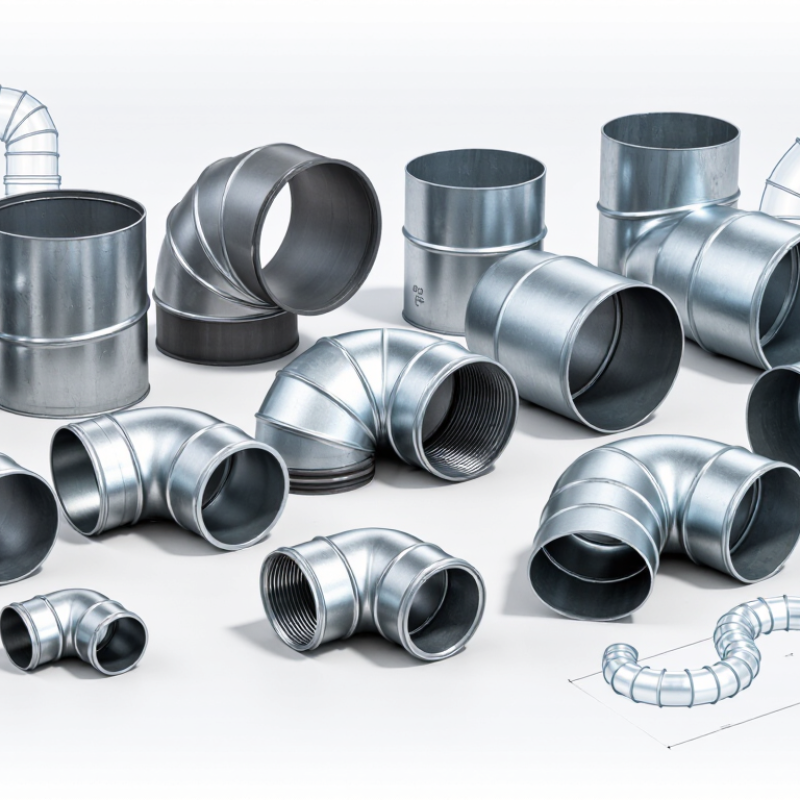
A rectangular duct elbow is a fitting that redirects airflow through a rectangular HVAC duct. It may turn the air by 90 degrees or another specified angle. The change in direction affects more than the duct route. Poorly proportioned elbows can create turbulence, pressure loss, and extra fan noise. A tight turn can be especially demanding. That matters. Turning vanes may guide airflow through some elbows, but their placement and spacing should suit the duct dimensions and system conditions. They are not a universal fix.

In practice, elbow design balances airflow, available space, and fabrication needs. A gradual turn can reduce resistance, yet ceilings and beams often leave little room. The inside radius, duct width, and transition into connected sections all influence performance. Installers should also check that joints align and that insulation does not obstruct access or airflow. Small offsets can complicate a neat drawing. Measurements on site are useful, though they can be rushed or incomplete. A design deserves a second look when space constraints force a sharp turn or an unexpected change in duct size.


Criteria for Selecting Leading Chinese Manufacturers

Selecting leading Chinese rectangular duct elbow manufacturers requires checking process evidence, not just price. Ask how each supplier controls elbow radius, throat dimensions, seam quality, and flange alignment. These details affect pressure loss and fit on site. Request drawings with tolerances, material grades, and coating specifications before comparing quotations. A sample inspection should include tape measurements, corner checks, and clear photos. Small gaps matter.

Review production capacity against your actual order, including custom sizes, batch consistency, and packing protection for transit. Ask for documented inspection steps and recent test records relevant to the product; verify their scope and dates. Confirm how defects, drawing revisions, and delivery changes are handled in writing. Communication is a real criterion. A fast reply means little if technical answers keep shifting. References from comparable ventilation projects can help, but check that the application and operating conditions are genuinely similar. Do not treat a certificate as a substitute for checking what it covers. Supplier data may be incomplete, so record assumptions and resolve them before approving production.

China Top 10 Rectangular Duct Elbow Manufacturers: A Key Selection Criterion

Compare the maximum air-leakage coefficients for the EN 1507 leakage classes when assessing a manufacturer’s ductwork quality documentation. Lower limits indicate tighter ductwork.

Values shown are the EN 1507 leakage-class coefficients: A = 0.027, B = 0.009, C = 0.003, and D = 0.001. Use the applicable project specification and verify the supplier’s test reports; this chart does not rank individual manufacturers.

China’s Top 10 Rectangular Duct Elbow Manufacturers

China’s Top 10 Rectangular Duct Elbow Manufacturers should be viewed as a practical shortlist, not a verified national ranking. Buyers comparing Chinese suppliers should ask how each elbow is formed, joined, and inspected. Check the turning radius, seam finish, reinforcement, and dimensions against the project drawings. Small details matter. A rough throat or poorly sealed joint can complicate installation and airflow.

The U.S. Department of Energy’s Energy Saver guidance estimates that typical duct systems lose about 20–30% of moving air through leaks, holes, and weak connections. That figure covers whole duct systems, not elbows alone. Still, it explains why elbow joints deserve close inspection. Ask for leakage-test records, material specifications, and samples showing internal seams and turning vanes. Request tolerances in writing.

For a shortlist of ten, compare more than price and catalogue images. Check whether the factory can maintain repeatable dimensions across different sizes and supply traceable inspection records. SMACNA’s HVAC duct construction standards provide useful reference points for fabrication and reinforcement. Not every project needs the same pressure class. Confirm the system requirements before comparing quotations, and treat unsupported performance claims cautiously. A small sample inspection may reveal issues that a polished product sheet misses.

China Top 10 Rectangular Duct Elbow Manufacturers - China’s Top 10 Rectangular Duct Elbow Manufacturers

Technical comparison of common rectangular duct elbow configurations and selection factors. This is not a company ranking; dimensions and construction should be confirmed against project drawings and applicable codes.

No. Elbow Configuration Typical Angle Turning Radius Common Construction Options Selection Consideration
1 Standard rectangular elbow 90° Short or long radius, as specified Galvanized steel; welded or mechanically joined seams Check available space, pressure class, and airflow requirements.
2 Elbow with turning vanes 90° or project-specific Usually compact to medium radius Sheet-metal casing with internal turning vanes Vane layout and spacing should suit duct dimensions and design airflow.
3 Mitered elbow Commonly 90° Sharp or segmented turn Fabricated from joined sheet-metal sections Often useful where space is limited; assess pressure loss and noise.
4 Radius elbow without vanes Typically 90° Smooth, curved throat and heel Galvanized steel or another specified sheet metal Confirm the radius-to-duct-width relationship and installation clearance.
5 45-degree rectangular elbow 45° Radius or segmented construction Fabricated sheet metal with sealed joints as required Used where a directional change is needed without a full 90° turn.
6 Offset or compound elbow Project-specific Defined by offset and layout drawings Custom-fabricated rectangular sections Provide centerline, offset, connection, and dimensional details.
7 Elbow with splitters Usually 90° Compact or medium radius Casing with internal splitter plates Specify splitter quantity, profile, and support details on the design.
8 Stainless-steel rectangular elbow As required by the duct layout As specified on drawings Stainless steel; grade and finish project-specific Confirm material grade, corrosion exposure, and joining method.
9 Aluminum rectangular elbow As required by the duct layout As specified on drawings Aluminum sheet; alloy and thickness project-specific Check compatibility with the environment and adjacent materials.
10 Insulated rectangular elbow As required by the duct layout As specified on drawings Duct casing with specified external or internal insulation system Specify insulation type, thickness, vapor control, and access needs.

Note: Actual dimensions, sheet thickness, reinforcement, leakage class, pressure rating, and material requirements depend on the project specification and applicable standards.

Products, Materials, and Customization Options

Rectangular duct elbows vary in turning angle, throat radius, and overall dimensions. These details affect fit, airflow, and installation space. A compact elbow may solve a ceiling clearance problem, but its tighter turn can increase pressure loss. That trade-off is easy to miss on a drawing. Details matter.

Material choice depends on the air stream and site conditions. Galvanized steel is common for general ventilation, while stainless steel can suit damp or corrosive environments. Aluminum offers lower weight, though its strength and connection details need careful review. Ask suppliers to specify sheet thickness, seam construction, and any internal lining. A coating alone does not answer every durability question.

Customization may include nonstandard widths, angles, offsets, flange styles, and reinforced corners. Share duct dimensions, operating conditions, and installation clearances before requesting a quotation. Drawings help, but a physical sample can reveal awkward joints or handling issues. Check critical dimensions and inspect seams before installation. Not every option improves performance; extra reinforcement, for example, can add weight and cost. The right specification is the one that fits the system, not simply the most elaborate one.

How to Compare Suppliers and Verify Product Quality

China Top 10 Rectangular Duct Elbow Manufacturers

When comparing rectangular duct elbow suppliers in China, start with the drawing, not the sales brochure. Ask each supplier to quote the same dimensions, sheet thickness, material, bend radius, and connection style. Small differences matter. A 90-degree elbow with a tight throat can increase pressure loss and complicate installation. Request a marked-up drawing with dimensions and tolerances, then compare it with your project requirements.

Product quality needs evidence you can inspect. Request material certificates, thickness records, and clear photos of seams, corner joints, and reinforcement. For a sample, measure flange-to-flange dimensions and compare the diagonals. Unequal measurements may indicate a distorted frame. Check coating coverage at cut edges, too. Check the fit. Ask how the factory handles rejected parts and whether inspection records identify the production batch. Documents are useful, but they cannot replace a physical sample.

Compare lead time, packaging, and response quality alongside price. Specific answers about tolerances and corrective action often reveal more than a polished catalogue. If possible, arrange an independent inspection before shipment, especially for a large order. Not every defect shows in photos. A checklist can miss context, so revisit assumptions when site conditions change. Keep the approved drawing and sample on file to reduce the risk of receiving elbows that do not match the installation.